
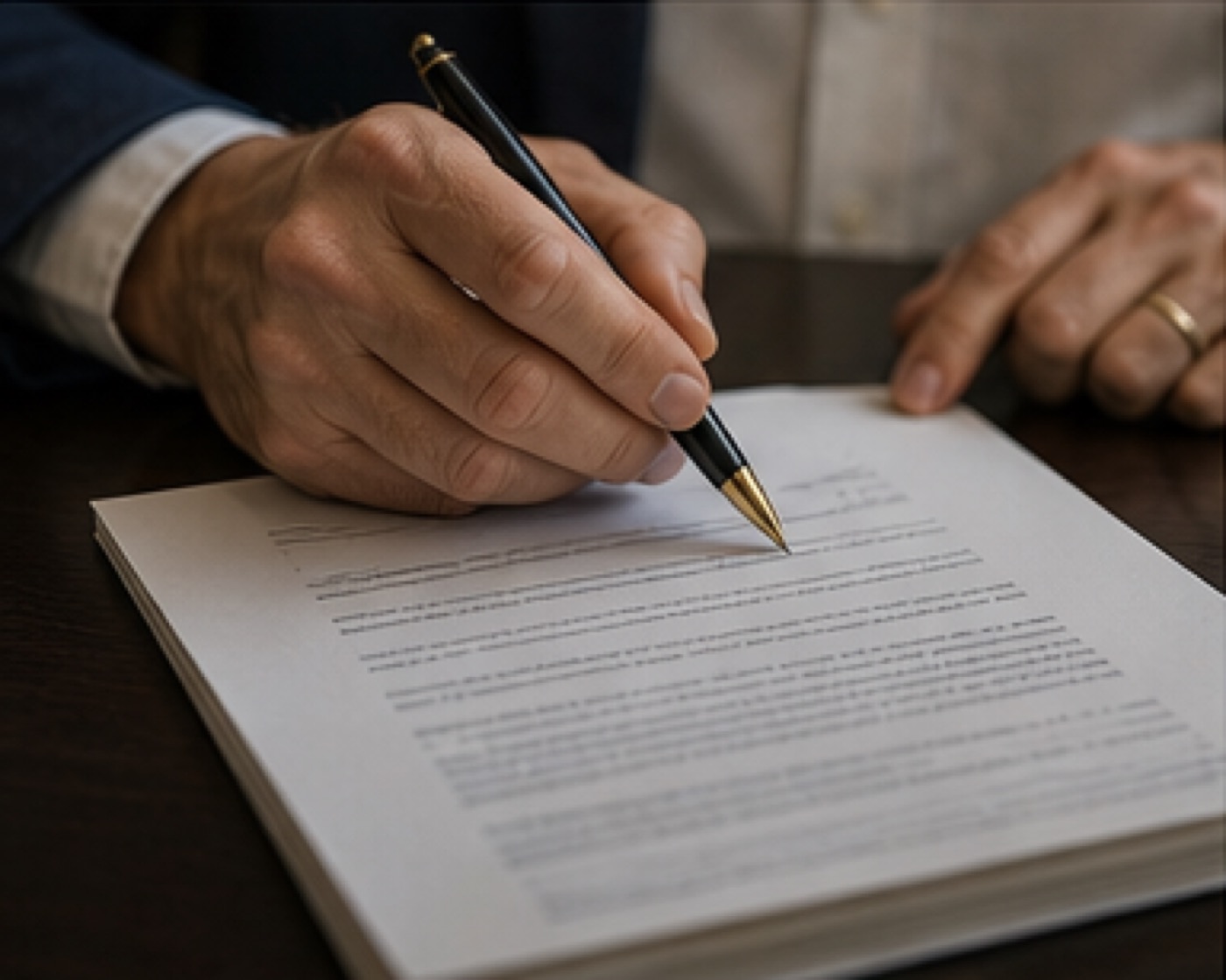
A will is the simplest document in estate planning, which is exactly why so many of them fail. They get downloaded from form sites, signed in the wrong way, witnessed by the wrong people, drafted with assumptions that don't match the family, or left in a drawer where nobody can find them. The bar for a valid Oklahoma will is real but low. The bar for a will that holds up at the courthouse without putting your family through a year of headaches is significantly higher.
When a will-based plan makes sense
Most Oklahoma clients who choose a will-based plan over a trust-based plan share a few traits. Their assets are mostly held in accounts with valid beneficiary designations, retirement accounts, life insurance, payable-on-death bank accounts. They own one Oklahoma home, not real estate scattered across multiple counties or states. They don't have business interests with complicated succession concerns. They aren't trying to avoid probate for privacy reasons. And the family is generally aligned, not navigating second marriages, estranged children, or known disputes.
For those clients, a clear will plus the full set of decision-making documents (powers of attorney, advance directive, HIPAA authorizations) is usually the right call. A trust would add complexity without proportional benefit. The probate, if one is needed, is often eligible for Oklahoma's summary procedures and gets handled relatively quickly.
What a well-drafted Oklahoma will should cover
The mechanics of a will are straightforward, but the details matter. A will the firm prepares typically addresses:
- Personal representative (executor). A primary choice and at least one alternate, with clear waiver of bond if appropriate.
- Beneficiaries. Specific gifts and residuary distribution, with language that addresses what happens if a beneficiary predeceases you (per stirpes vs. per capita matters).
- Guardianship. For parents with minor children, primary and alternate guardian nominations and, where appropriate, a separate financial conservator.
- Children's trust. Inheritance held in trust to a sensible age, with a trustee separate from the guardian, so a teenager doesn't receive a check for $400,000 on their 18th birthday.
- Specific bequests. Identified personal property, guns, jewelry, tools, vehicles, that should pass to a specific person rather than into the general residue.
- Self-proving affidavit. Witnessed and notarized at signing, so the will can be admitted to probate without locating witnesses years later.
- Pour-over provision if you also have a trust, to catch anything you forgot to fund into it.
The probate connection
If you only take one thing away: a will does not avoid probate. A will tells the probate court what you wanted. The court still oversees the process, which means court filings, public notice, an inventory of your assets, creditor handling, and eventual distribution. For estates that qualify, Oklahoma offers summary procedures that are faster and less expensive than full probate, but they are not automatic and must be requested correctly.
For most clients with modest estates and an aligned family, this isn't a crisis. For others, the prospect of any court process is reason enough to consider a trust-based plan instead. Read more about Oklahoma probate.
Common mistakes in DIY Oklahoma wills
The wills that cause the most pain in probate court tend to share a few problems:
- Witnesses who were also beneficiaries (raises questions about the gift to that witness).
- Missing self-proving affidavit, requiring witness testimony years after signing.
- "I leave everything to my kids" with no contingency for a child predeceasing the parent, and sometimes that child has children of their own.
- Specific bequests of property the testator no longer owned at death (a beach condo sold three years earlier, for example).
- Naming a single executor with no alternate, who has since passed away or moved out of state.
- Leaving substantial inheritance directly to a young adult with no trust structure.
- A will that contradicts a more recent beneficiary designation on a retirement account or insurance policy.
Storage and accessibility
A signed original Oklahoma will needs to be safely stored and findable. Some clients keep theirs in a fireproof box at home; others use a safe deposit box; others ask the firm to retain the original. The wrong answer is the bottom of a desk drawer nobody knows about, or a safe deposit box that family can't access without a court order. We talk through storage at signing so the document is recoverable when it's needed.
How we draft Oklahoma wills
- Conversation first. We talk through your family, your assets, who you'd want as executor, who you'd want as guardian if you have minor children, and what concerns you have about how things would play out.
- Plan summary in plain English. Before drafting, we send a written summary of the plan so you can confirm it reflects what you actually want.
- Drafting and revision. We draft the will and any companion documents, walk through them with you, and revise until they're right.
- Signing. We handle witnesses, notary, and the self-proving affidavit in one appointment.
- Storage and follow-up. You leave with originals and copies, and we review where everything will be kept. We don't disappear. When life events happen, we can update.
Not sure if a will is enough?
For many Oklahoma clients, a will plus decision-making documents is the right plan. For others, a revocable trust adds enough value to justify the complexity. If you want a structured walkthrough of which fits your situation, try our Will or Trust? guide. It's a short branching questionnaire that produces a tailored recommendation, not a sales pitch.
Related pages: Trusts · Estate Planning · Probate